When Sheets is still the right tool
If one operator owns the workbook, the formulas are understandable, and the team can update it without breaking structure, Sheets remains a strong fit.
Early inventory templates, recipe costing pilots, and temporary P&L bridges often belong in Sheets first.
- Small team with clear ownership
- Fast-changing process still being designed
- Low permission complexity
- No multi-location consolidation pain yet
Signs the workbook is becoming a liability
Broken formulas after a paste, managers editing the wrong tab, conflicting versions, and reporting that only one person can explain are classic failure modes.
At that stage, more formulas rarely fix the trust problem. Structure does.
- Multiple people editing source tabs
- Copy-paste from POS, labor, or invoices every week
- No clean audit trail for changes
- Different locations using different versions
- Decisions delayed because nobody trusts the sheet
Automation middle ground
Custom Google Sheets automation can clean imports, generate reports, send alerts, and reduce manual cleanup while keeping the familiar interface.
This is useful when the spreadsheet model is still correct, but the labor of maintaining it is not.
When a custom dashboard wins
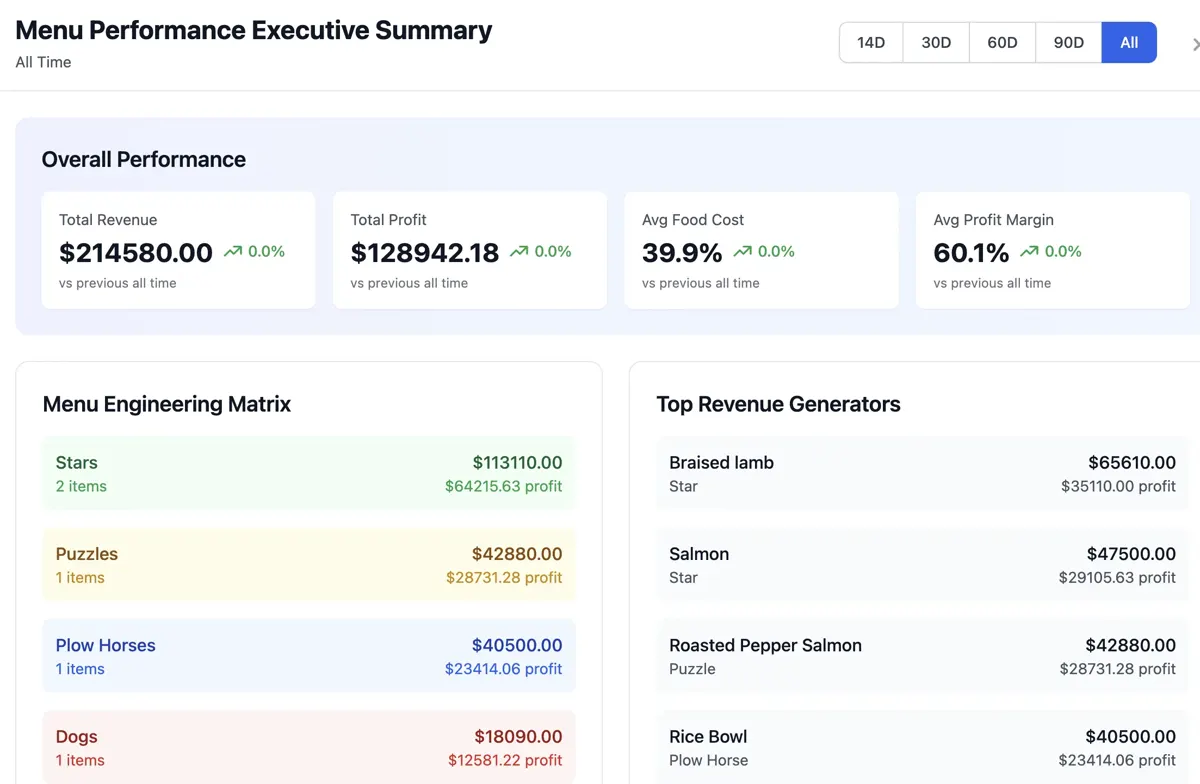
Owned dashboards and internal tools win when the restaurant needs product-like workflows: role permissions, mobile-friendly inputs, location rollups, exception queues, and AI summaries tied to structured data.
The deliverable should still be owned by the operator — not another SaaS subscription that scales with locations.